|
|
|
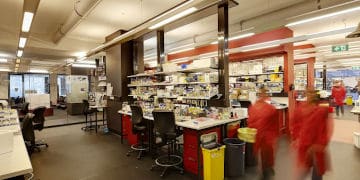
The South East Melbourne Alliance for Regenerative Therapies (SMART) is a group of organisations who have come together to pool and coordinate their complementary strengths in research, training, development and clinical services to accelerate the delivery of world-leading outcomes in the field of regenerative medicine. This cluster takes advantage of the close proximity of some of Australia’s leading research and clinical teams in the fields of stem cell science, tissue engineering and regenerative medicine, with a large proportion clustered around the Monash University site at Clayton. These include
- Australian Stem Cell Centre
- Australian Regenerative Medicine Institute
- CSIRO Molecular and Health Technologies
- Monash Institute of Medical Research
- Monash Immunology and Stem Cell Laboratories
- Monash University, which include School of Biomedical Sciences and Monash Institute for Nanosciences, Materials and Manufacture
- Monash Medical Centre
This group of organisations brings together depth of expertise in the various complementary domains that underpin progress in the emergent field of regenerative medicine.
- A prestigious history in fundamental stem cell science and developmental biology
- Experience in development of novel biomaterials and tissue-engineering scaffolds
- Expertise in cell signalling and matrix biology, and characterisation of the niche
- Characterisation and control of differentiation pathways
- Expertise in immune tolerance issues for cell therapies
Broad range of multidisciplinary groups developing enabling tools, including biomarkers, imaging techniques, cell culture methods and bioreactors
- Access to world class infrastructure and equipment, such as the Australian synchrotron, MATF, FACS, and high content screening
- Clinically-focussed research programs in a broad range of therapeutic areas
- Access to a broad range of cell types and animal models
- Disease specific cell lines, drug screening, in silico drug design and synthetic chemistry
- Training of the next generation of scientists and research leaders
- World-class hospital-based research and clinical services
Successful delivery of large scale applied research programs with industry partners
- Track record in progression of novel technologies through to clinical outcomes and formation of new high-tech companies.
In early 2008, SMART groups convened at a strategic planning workshop and identified a common goal for 2015 - to build from existing strengths and ensure that the cluster is recognised as one of the world's leading precincts for regenerative medicine. A key element was that the group would need to engage more strategically over longer time frames, and focus resources in areas where they are truly internationally competitive. A working group formed to progress the initiative and develop this draft strategic plan for consideration by broader stakeholders.
This plan includes a preliminary overview of the key capabilities and infrastructure relevant to regenerative medicine within the Clayton precinct and a summary of key external factors driving the development of regenerative medicine. The capabilities of the alliance position them well to deliver into several areas at the forefront of the field, including:
-
Deliver systems, tissue engineering and immunological strategies
-
Comparison of the relative advantage of different types of stem cells (eg mesenchymal vs ESC or amnion-derived) for various clinical applications
-
Cellular reprogramming and control of cell fate
-
Systems biology approach to identifying and controlling regenerative pathways
-
Development of bioactives targeting stem cells and in-vivo regenerative pathways
-
New tools and techniques for cell handling, expansion and storage, advanced characterisation and in vivo imaging.
Maximum competitive advantage and impact will be achieved by integrating strengths in basic research, applied research and clinical translation that exist within participating organisations. Thus, five aspects have been identified as critical in the engagement model for SMART participants:
-
Early clinical input to ensure well-targeted research and translation programs
-
Focus on excellence and multidisciplinary collaborations in discovery research, and development of larger research themes in areas where internationally competitive
-
Establishment of larger, cross-organisational, therapy-focussed translation programs
-
Progression through to clinical trials with hospital partners
-
Early industry engagement and creation of an entrepreneurial environment to foster commercial development of leading technologies.
A copy of the draft can be downloaded.
|